Showing posts with label farming. Show all posts

Monday, July 9, 2012

Outsmarting Nature


Many people would like to see food production go “back to nature,” and I think that sounds like a fabulous idea. But where I live, Nature could care less if my family eats. I have tried raising backyard chickens for eggs, and vegetables in a small garden, and I have been met with challenge after challenge. My latest challenges have more than two legs.

Rest in peace, girls. :(
I’m posting this because my chicken coop has officially become a playhouse for the kids. The last of my beautiful, jumbo-egg laying hens are gone, becoming another meal for the local wildlife. I commented on an article in my local paper about urban chicken farming, saying that maybe an urban backyard may be the ideal place for raising chickens, since my woodland home has become a banquet hall for hungry predators. Someone was quick to “educate” me, telling me I needed to provide them a coop so they would roost. Thanks for the tip, but my chicken mansion had Fort Knox-like security at night. It provided not an ounce of safety, however, for my free-rangers during the day from coyotes and hawks. If I try it again, the days of go-where-you-want will not be an option for my girls. And some wonder why commercial chicken producers keep their birds in houses. Hmmm – cruelty or protecting your investment and the food supply?

Cucumber beetles. Thank you, Ric Bessin, entomologist
friend at the University of Kentucky, for the photo.
In addition to my latest chicken chapter, we also attempted a small garden. It is close enough to the house that the deer and rabbits have not been visiting, but the Cucumber beetles absolutely love the squash and cucumbers that I have provided for them. Since I do not have to rely on this garden to feed my family, I have not used any chemical pesticides. I would go out occasionally and knock them away, but didn’t discover their damage early enough. They were clipping off all the blossoms. No blossoms, no fruit. Did I mention that I also have a mysterious, volunteer gourd growing near the garden? The Cucumber beetles really like that one, too.

I obtained the vegetable seeds from Seminis, which is currently marketing a much-talked-about genetically modified hybrid sweet corn called Obsession II. I asked their marketing team recently if any of my seeds were genetically modified, and they said, “no.” I put in a request for beetle resistant squash. If that does not happen soon, and I expect to have any decent harvest, I believe I’ll have to go to chemical warfare. Maybe organic methods work in other places and growing systems, but I have yet to be successful with them. I even had a conversation with an organic farmer in Nebraska explaining that I have had no luck growing cabbage. And to my surprise she said, “That’s why we don’t grow cabbage.”

My chewed up cabbage from last year. Something enjoyed it!
Our final challenge this spring and summer has been the insects that feed on me and my animals: ticks, mosquitoes, horse flies, deer flies and chiggers, as well as the diseases they are known to carry. I've tried just about every product and method available, and the only real relief comes from dousing my kids head to toe with Deep Woods Off every trip outdoors. I can only imagine what that stuff is doing to our bodies as we breathe and soak it in. Nothing works for the horses (but our bond grows stronger every summer because they know I am pleased to provide them a good scratch or squash a juicy horse fly). I am waiting for some smart person to develop a pill or injectable medicine to keep the little bloodsuckers off our skin. 

My challenges are not unique. Our farmers face similar adversity every day, and they are using technology and better management methods to help keep nature from destroying the food supply:
  • Crop rotation and natural predators
  • Crop protection products
  • Structures for plants and animals
  • Conventionally-bred hybrids
  • Irrigation
  • Genetically modified varieties that withstand drought and pests, and allow more efficient pesticide use
  • Vaccines and antibiotics that keep animals healthy
  • Maintaining wildlife refuge areas

And I even know of a vaccine that controls horn flies on cattle (www.flyvax.com) that could significantly reduce their stress. 

Are there any of these methods that you approve of? Any you don't? Are some okay to use when maintaining a lawn or golf course, but not on food? If you do not want antibiotics used for meat animals, does that mean you would forego the same medicine for your child or pet to manage antibiotic resistance? If you don't want any trace of pesticide residues on your produce, does that mean you don't use manufactured pharmaceuticals in your own body. Are their methods you feel do more damage than good?

On one hand I appreciate technology—where would be without it? Hungry, diseased, dead?—but on the my semi-misanthropic hand, I sometimes blame technology for growing the population in the first place, thus providing us the challenge of finding, using and growing the resources to sustain weaker selves. And I understand why some blame technology for creating more challenges or environmental problems, like antibiotic resistance or reductions in beneficial insect populations.
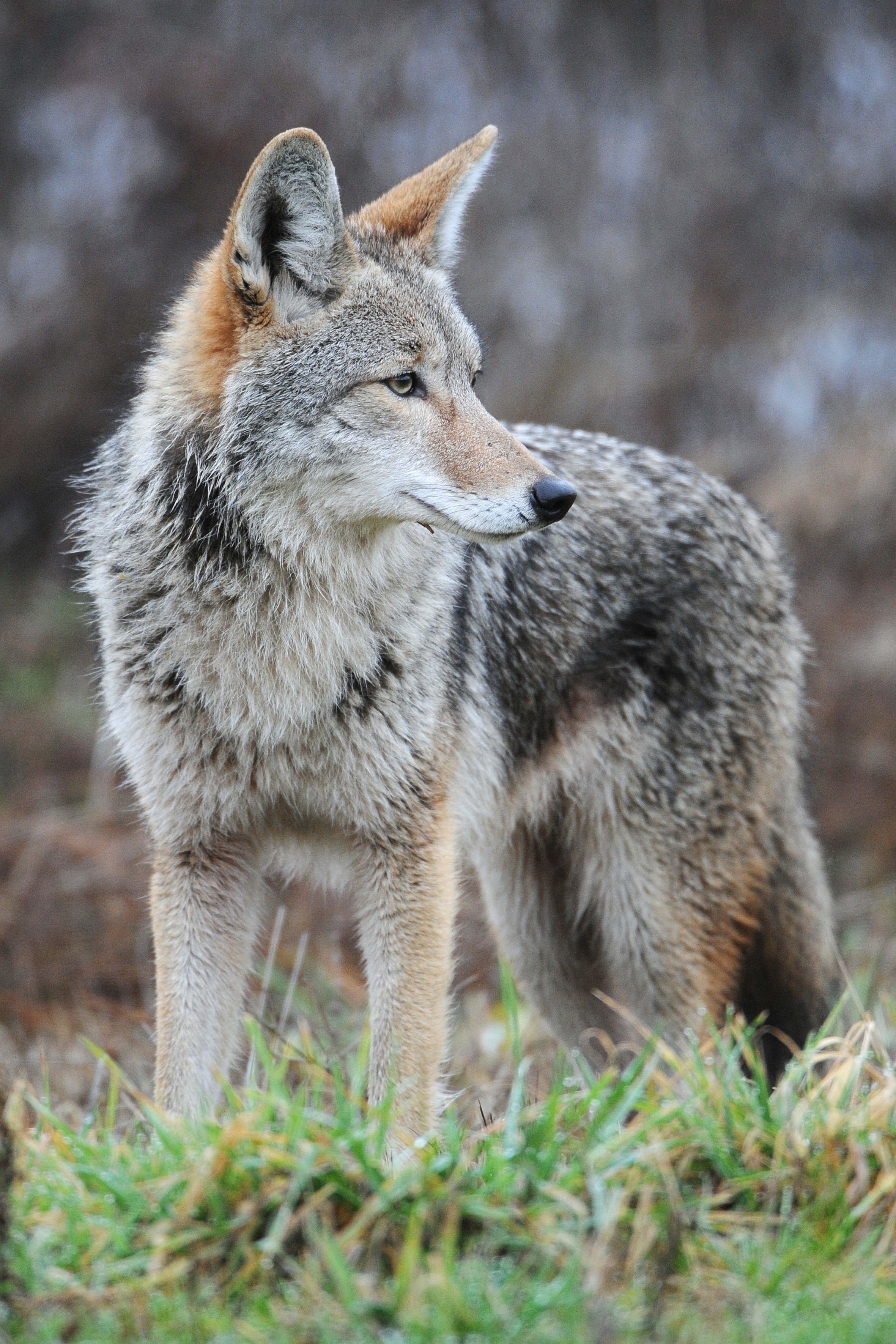
Did I happen to mention one of these
ran 25 ft. behind me and kids on Saturday
night? I've had just about all of "nature"
that I can stand.
Some believe going back to basics (no pesticides, no manufactured fertilizers, no genetic modification, no animal confinement) will put the Earth back into a more natural balance, as "God intended." This philosophy may actually work for some farmers and gardeners. And these food producers have a pretty good base of customers and supporters in our current day. 


But is going back to the beginning really the answer? Do we sit back and pray for the best, or do we use the minds that God gave us to continually outsmart the nature He created in order to flourish?

The biggest issue I have is that some are encouraging our lawmakers and regulators to restrict the use of technology and dictate how food should be produced. Based on my experience, I don’t think there is any way we could produce enough food for our increasing population using 19th century farming methods. I also know that some technologies may need to change — or get better — to protect the Earth and future generations.

What I find as the silver lining here is that I think we can have it all – enough food for everyone, today and in the future, with less strain on our environment. I believe environmental responsibility is a value shared by all farmers, whether they are USDA certified organic, heritage seed savers, or the 3000-acre corn farmer using the latest genetically-modified variety so she does not have to spray as much pesticide or use as much fuel. I see a future of farmers working together for that common goal, and it may be as simple as a crop farmer having a conversation with his bee-keeping neighbor to manage when is the best time to spray any insecticides. But farmers must be able to choose what works best for their climate and the nature-created challenges on our changing planet. At my house, that may be GMO squash and a shotgun.

In the end, I believe that nature will continue to change, and organisms will continue to adapt. The winner will be the one that adapts the quickest. And if a manufactured technology is what it takes to prevail, I will not pass judgment. Nature is a beast, and I want to survive! 

Feel free to follow me on Facebook at http://www.facebook.com/FoodMommy or on Twitter: @foodmommy.

Monday, October 17, 2011

Big may not be all BAD, but Small is not OUT OF TOUCH

In my post "Incedible Cause for Concern" last week, I shared my frustrations with the public's lack of understanding about today's farmers. Whether you praise their efforts or curse the current direction of our food system, the average U.S. farmer is feeding 155 people, compared to 27 people in 1950. The point of my post was to encourage people to remember the faces behind all the farms that are providing us 82% of our food, as they are not all huge food company conglomerates hundreds of miles away. What I may have failed to do, however, is praise the small farmers (whatever your definition of "small" may be) in which so many hold dear to their hearts. Each farmer has a unique story, and we all need to learn to listen to every voice at the "table," myself included.

Therefore I wanted to share this post by a fellow Kentucky blogger, Friends Drift Inn. She wants to make sure we know that she is also a famer - a very tired farmer -  trying to produce food for reasons she believes the current food system has failed her.

"I am a farmer. I am not the enemy" - http://www.friendsdriftinn.com/real-life/world-food-day-2011.html


Happy reading.

Tuesday, October 11, 2011

Incredible Cause for Concern

What is your definition of “farmer?” Apparently to many of the visitors to the Incredible Food Show in Lexington, Ky. this past weekend it is someone who is growing their own food in their backyard or selling at a “Farmer’s” market.

Farm women volunteers, who are part of the CommonGround initiative, went to the Incredible Food Show to engage with the public and answer any questions they may have about how food is produced on their farms. I was able to assist by moderating a panel discussion about food marketing and production concerns, as well as, encourage conversations at the CommonGround booth.

While it seemed everyone was glad we were there, it really shocked me that every time I mentioned to someone that we were there on behalf of farmers to encourage conversation about how food is produced, the instant response was, “Oh, I love that. I visit the Farmer’s Market all the time.” Or, “My sister has a garden. That’s great.”

The Voltaggio brothers - of Top Chef fame - showed the audience at the Incredible Food Show in Lexington how to use every part of local veggies for some very creative and "artful" eating.

Another thing that really got to me was the fact that one of the guest celebrity chefs, Michael Voltaggio (his brother Bryan was also there) made the comment during their show that “produce from local farmers was great, but everything at the grocery store was test tube food grown in a factory.”

Really? Why does everything think that?

I admit 100% that the fruits and vegetables grown right under our noses taste better to the 100th degree. Farmers that have local markets are able to pick the produce at the peak of freshness and can get it to the consumer very quickly. Unfortunately, this makes up a very small portion of the food supply, at least in Kentucky. There is a big push right now to get more local food to our local customers, but it will take some time.

In the meantime, however, the produce farmer in Ohio, or even California, who is large enough to service several grocery stores in our state now has a big “X” on his/her face. Some folks are just convinced that since the farm is not “local” and is producing food on several hundred acres instead of two, that the product is bad, industrial food.

At what point does a farmer or farm become “industrial?” And when did “success” become a bad word in agriculture?

Having visited several Kentucky farms recently, I wish all the best for them. If Mary and Shane Courtney’s vegetable business is thriving, and they are able to add more acres, more labor, and service more customers, I hope that is what they do. And what if they are able to grow enough produce that they can move beyond the local CSAs, wholesale and restaurant markets? Is there a point where they will no longer be considered farmers? Maybe that is when they are able to hire enough help that they can actually take a vacation during the growing/harvest season? Heaven forbid.

We have farmers and farms of all types and sizes, using various production techniques and located in all geographic areas. Some areas are great at growing produce, and other land is best suited for grains or livestock production. I know that it will take all farmers and farms to satisfy the needs of our growing population. Just today I saw the following statistic:

“Up until 1920 more people lived on farms than in cities and it took almost 20 million farms to feed the U.S. population which at the time was about 100 million people. Advances in and modernization of agriculture since then now allows for 6.5 million farms to feed 300 million people in the U.S. and export food to people around the world.”

While some may not like the idea of fewer farmers producing more food, this is our current food reality, and I don’t think it is all bad. Jerome Monroe Smucker of Ohio made apple cider from a few apple trees planted by Johnny “Appleseed” in the late 1800s. As popularity grew beyond the locals, he needed more supplies of fruit and he eventually had to move some of the processing to Washington, where fruit was more plentiful. Now his family’s products are sold all over the world.

Back to Kentucky, many of our grain farmers are selling corn and wheat to the local distilleries for bourbon and other spirits. Those products are also sold worldwide. Our local family grain farmers are selling to the food industry as well. Our wheat ends up in crackers and cookies sold throughout the U.S. at Wal-Mart stores via Siemer Milling in Hopkinsville. Our corn ends up in corn chips sold all over the country via Mesa Foods in Louisville. Weisenberger Mills in Midway has used corn and wheat from local farmers since 1865 to make its baking products.

My hope is that no matter the origin of the food products, the consumer remembers there is a face behind the production of the food ingredients, and that face is local to someone. To me, the term “farmer” goes beyond a person or family growing enough fruits and vegetables for themselves and few folks at a farmer’s market. It goes beyond the person like me with a few chickens in a coop. Farmers are producing food for the masses.

Just a side note before I close – I was also perplexed at literature I saw from Whole Foods at the Incredible Food Show. On the back of a local magazine, they placed an ad that said “Eat Seasonal. Eat Local.” On the front page of their newsletter/coupon book, however, they were advertising a pasta product produced in Italy. To me this is very hypocritical. The whole premise of eating local is to reduce the environmental impact of shipping food all over the place. Why aren’t they selling pasta made from Durum wheat in the good ole USA? Seems like the Pacific Northwest, where Durum is grown by our farmers, is a little more local than Italy. I’m just saying.

Wednesday, September 21, 2011

Know Your Story. Write it Down. Share, Share, Share!

I was so incredibly frustrated last night. I had a perfect platform and opportunity to share my “story,” and in my mind, I flopped.

I was invited to be on a panel of women agriculture leaders at a farm women event yesterday. The coordinator wanted us to share how we got to the positions we have today. I was thinking that would not be a problem since I know my life pretty much better than anyone.

I thought it would be good to talk about how I came from a small semi-subsistence farm, my horses led me to an education in agriculture, and the fact that I never thought in a million years I would work for farmers. I also wanted to point out how after so many years, we are finally realizing the importance of empowering women to help share the message of farming and food.

Fortunately I made it through all that, but then my nerves started messing with my head and I completely forgot to share the good stuff, where I and my experience were heading.

Because of this new tool called social media, I am no longer just talking to the local fourth-grade class about grain, creating web pages and trade show displays, or writing content about and for my farmers; I am connecting with people across the country and beyond. While I am not a farmer, my work in the “field” has given me a unique viewpoint, and I now have a way to easily share that with who will listen. Social media also provides a richer learning opportunity. I am more aware of the feelings and struggles of other farmers, whether big or small, modern or traditional. That has helped me lift my blinders to my specific niche and learn to embrace others.

My day job might be “woman in ag,” or as some folks like to call me “corn girl” (which I hate by the way), my most important job is MOM: buyer and preparer of the food. My biggest motivation for involving myself in food and farm conversations is my desire to have the food choices I have today in the future.

Now that I can actually look at what I want to say on the screen, hopefully I will be a little more prepared to share this story when the opportunity presents itself. (FYI: I am one of those visual learners). Or better yet, maybe I, as well as others involved in farming, need to create those opportunities.

Follow me on Facebook at www.facebook.com/foodmommy or on Twitter at www.twitter.com/foodmommy.

Wednesday, August 10, 2011

7 Families Went Hungry…

At least they would have gone hungry if they were depending on me and my small “farm” to feed them. A raccoon killed seven of my chickens last week.

You can guess that I was extremely mad. I have put a lot of time, money and emotion into those chickens, and I was looking forward to collecting their eggs to feed to my family. I was also having the debate with my oldest child whether we should be eating the extra roosters. She had finally decided that eating them would be okay, but the raccoons beat us to it. And it wasn’t pretty. The most frustrating part was that out of the seven killed, very little of those chickens were actually eaten.

We still have nine chickens left: two roosters and seven hens. This will be enough to provide us eggs, and we will be able to share with our family and neighbors. You can imagine that we have upped our chicken security. They now are put into a large dog crate covered with chicken wire each night (tree limbs are provided for them to roost on), and we have set a trap outside their home for the past several nights. And yes, we have captured several culprits, but nothing in the last two nights. We will continue to do this until their new critter-proof coop is ready, which should be by this weekend.

But why is this story important? I recently attended a conference of farm women, and a featured speaker asked us if large-scale/commercial/factory farming is “right.” That seems to be the million dollar question these days regarding food production. Many people want to see farming like it was in the good-old days where more than half the population had a small farm in which they raised most of their food and enough to feed a few non-farming neighbors. But things have definitely changed.

Fewer and fewer people have dedicated themselves to producing our food. Most of us just don’t want to do it… it requires land, capital, long hours, and a lot of faith. It’s not as easy as the internet games Farmville and Farmtown on Facebook make it out to be. I think someone needs to program in unpredictable natural disasters, disease, pests, low prices and high inputs. Then let’s see how many people want to dedicate hours to producing their virtual crops.

Having worked for farmers in the modern age – and unbeknownst to most of the world, 95% of these farmers are not food company owned – I have a real appreciation for their growing success. It was comical to see the article in Time magazine about how farmers are becoming rich these days. But the difference between a wealthy banker or stock broker and a farmer is that any profit made by the farmer is immediately invested back into his or her operation – they buy more land, they buy better equipment, they hire more people, and they invest in methods to improve the sustainability of their practices. They are not off buying yachts and summer homes in France. They are creating jobs and investing in their communities and the future of our food.

Now, I will admit 100% that I am not immune to the “factory farm” expose videos showing our food animals being mistreated or in poor living conditions. I made myself watch the Mercy for Animals video of the corporate hog facility in Iowa. I immediately left the house, turned my chickens out to run around the farm and proclaimed to my husband that I would no longer be purchasing pork from my grocery store (which was named in the video). I also suggested that we buy a pig or two to raise ourselves, just like my grandparents did, but that didn’t fly.

And since I have undertaken the task of advocating for our US farmers and their practices, I had to ask myself, “How do I defend this if I don’t like it?”

That has been a tough question, but something I felt I needed to address. After several weeks of contemplation, my answer about the morality of farming comes down to this:

In most cases, I believe the individual farmer feels a strong sense of duty to feed his or her fellow man. That sense of duty may be tied to faith and/or a real desire to contribute a basic necessity for life. Most farmers do not intentionally set out to abuse animals or pollute the environment, but try to produce food the best way they know how at the time with the resources they have available to them.

Improvements are constantly being made – not for making loads of money, but to maximize future productivity. Making a profit is still important, however, and we cannot lose sight that farmers must provide for the basic needs of their families as well. I believe a lot of farmers are complacent at just getting by, but operating at a loss for several years is difficult to endure for anyone, which has led to many farmers leaving the business.

I also believe most farmers are willing to listen to the needs of consumers and will “fix” certain aspects if it makes logical sense. Some farmers are turning to niche markets to meet those needs and help themselves stay afloat financially. What I don’t want to see happen though is our food supply drastically reduced because going back to the “good-old days” makes people feel all warm and fuzzy inside. Our farmers will need to feed 9 billion people by the year 2050, and there are still cases of famine across the globe. We still need efficient, larger-scale operations to feed the majority of the under-privileged people across the world and even in our nation.

Now back to my chickens… I love the fact that I am producing some food for my family in the best way that I know how. The chickens I have left are happy and get to eat as much horse poop, bugs and green stuff as they want. Raising chickens is expensive (I could have already purchased 1700 dozen eggs with what I have spent in food and housing) but it makes me feel good. But I would be hungry if I had to depend on these chickens to feed me and my family. Okay, seven families may not be hungry, but I have lost several years’ worth of eggs and a few meals worth of meat in one night. The notion circulating that we could all sustain ourselves on 4.5 acres of land is laughable to me. God doesn’t make things so easy. That perfect world only exists on Facebook.

It is my true opinion that we have the ability to feed our people on the land available to us, without deforesting millions of acres and without causing further destruction to our natural resources. I am seeing some amazing technology coming down the pike to help us achieve that. Some may think that it is more “right” to not use pesticides, synthetic fertilizers, genetically-modified crops, or confine animals, but I can guarantee that if we all turned back the clock on food production, many more people would be starving. Where is the morality in that?

Update: After having a great conversation with a reader I wanted to clarify that I will never try to defend bad behavior of farmers or food companies. But I feel I need to defend agriculture in general - big or small - for putting food on our tables. I have said it before; farmers have a really hard time recuperating from the misdeeds of a few. It is our right as consumers to demand better, but we must also realize what it will take to feed more people with less resources.

Friday, June 4, 2010

Why I Choose to Eat Meat

Back when I was a kid (we'll say 20 to 30 years ago), vegetarians were few and far between and were often thought of as a little strange. Now, it seems, being a vegetarian or vegan is the "stylish" thing to do. More and more people of all ages are making the choice not to eat meat for reasons that make sense to them.

The majority of the population continues to eat meat because that's what they have always done, as their parents did before them. As our ancestors figured out, eating meat is an easy way to get protein, and most of it just tastes good.

I put myself in a different meat-eating category. I have a made a very conscious decision, and I "choose" to eat meat. I know it comes from animals, and I realize those animals' lives were cut short for my sustenance. This is something I think about each time I sit down to a meal, and I am grateful.

As a true lover of animals, I will admit that going meatless crossed my mind a couple times. I am the kind of person who never kills a spider, carefully removes creepy-crawlies from my home, and stops traffic to see a turtle or family of ducks safely cross the road. My taste buds and feeling of hunger satisfaction, however, quickly transformed me back into the omnivore that I am.

Now, one could ask how I can eat meat when animals are being mistreated (recent Conklin Dairy video would be a good example) or are forced to live in confined conditions. In my good opinion, acts of such mistreatment are few and far between, and I believe that anyone who abuses animals in this way should be punished as if they had assaulted a fellow human. Confinement, or as I like to think of it has a more controlled habitat, has become a necessary practice to meet demand. There are more people, less farmers and less land to produce these animals.

Do the animals like their confined conditions? Would they rather be running free? While I don't have cows or chickens at the moment, I do have horses. It has been 90 degrees or higher the last several days. They have free run of the barn and a five acre pasture with lots of shade trees. I CANNOT MAKE them leave the confinement of their stalls. Why? The barn has a large fan and is generally free of all the blood-sucking bugs. They also know that I come to feed them twice a day.

I also have to think about the many times I have watched the animal shows on TV. Prey animals are free game for the not-so-nice hunting practices of their predators. I have seen animals being eaten while they are still alive. If I were the prey, I'd say "sign me up for farm life any day!" And on the flip side, I wonder if animal activists want to tell lions, tigers, eagles, crocodiles, sharks, etc. that they should not eat other animals because it's not the "nice" thing to do.

And when I hear, "I don't want to eat anything with a face," or even most recently, "I don't like to eat things with eyelashes" (you've got to be kidding me), it saddens me. WARNING, I'M GOING INTO PHILOSOPHER MODE - Who is to say the cow with long eyelashes and a calf by her side is any more important than the clam that quietly crawls across the ocean floor, or the tomato plant. I don't think of even myself as more worthy of a life on earth than any other living creature, be it plant, animal or fungus. We all WANT to survive.

The fact is, if one organism eats, another organism is sacrificed for its survival. What we can do as humans is to provide the animals we consume with the utmost respect that we can. I truly believe that most all livestock farmers are doing this today. They have to... it is their livelihood.

While I think the ideal situation - the most natural situation for which we were born to do - would be for us to produce, raise or hunt for our own food, those days are long gone. A lot of us are more worried about getting to our air-conditioned home to view the latest episode of "Glee" while tweeting our tweeps and planning our island vacations. Therefore, I place the care of my food, be animal or vegetable, in the hands of our farmers. The farmers that produce with compassion and heart are my heroes. The animals that give their lives so that I can be a part of this world are my saviors.

My omnivore diet provides me and my family the nutrients we need without having to load up on supplements or come up with creative diet plans. As long as I recognize the fact that hamburgers don’t magically appear in the meat case, and our farmers are taking good, responsible care of their animals, I will continue to “choose” to eat meat.

Wednesday, June 2, 2010

So why am I doing this?

I have been thinking about blogging for some time. I have lots of very good random thoughts (in my opinion) about life, spirituality, our purpose,and so forth, but I'm not convinced the rest of the world would want to get inside my head.

HOWEVER, I know I have a lot of good and factual things to say about where our food comes from. I have been working in the agricultural industry for more than 12 years and have a real appreciation for the farmers who provide the food on my dinner table. I am also a consumer and mother of two. I care about what goes into their little bellies. I make educated choices about the food we eat, and unlike what many attention-mongers want you to believe, I know that American farmers are providing us the safest food in the world. And those farmers are also achieving this while they are improving the environment in which we live.

If you are interested, I can share with you my thoughts on agriculture, farmers and food. Just call me "The Food Mommy."
Related Posts Plugin for WordPress, Blogger...