Showing posts with label modern agriculture. Show all posts

Thursday, February 21, 2013

This Mom is Thankful for Frankenfood

Yes, I work for farmers who choose to grow genetically modified corn and soybeans. I am able to read research defending the benefits of modified crops to farmers, the environment, and ultimately the growing human population. I also have friends who work for Monsanto, as well as other seed companies, who sell and market genetically modified hybrids. I smiled when I saw that environmental activist Mark Lynas changed his position from condemning genetically modified foods to celebrating them. But in the end, I am NOT defending GMOs or “Frankenfoods” for these reasons. I have a better one.

I have witnessed a huge shift for the better in our food system in the past few years. I see more people interested in food and wanting to know how it is produced. I see more people wanting to purchase food from small, local or organic farmers, and this shift is providing a wonderful opportunity for those willing to provide these foods.  Others want to produce their own food, which is also a step in the right direction to foster future food security.

Having options is good for both the consumer and the producers. Competition is good for business and the economy. I don’t necessarily like that it takes people screaming with fear to have this change happen, but nonetheless, we are moving in a great direction for agriculture. I will continue to share as much information that I can to help others make informed decisions.

And I am sure there are many out there who do not or will not share my glorified opinion of GMOs, and I am fine with that. If someone is looking for non GMO, I will gladly point them in the direction of an organic farmer. I want to see them prosper as well.

Monday, July 9, 2012

Outsmarting Nature


Many people would like to see food production go “back to nature,” and I think that sounds like a fabulous idea. But where I live, Nature could care less if my family eats. I have tried raising backyard chickens for eggs, and vegetables in a small garden, and I have been met with challenge after challenge. My latest challenges have more than two legs.

Rest in peace, girls. :(
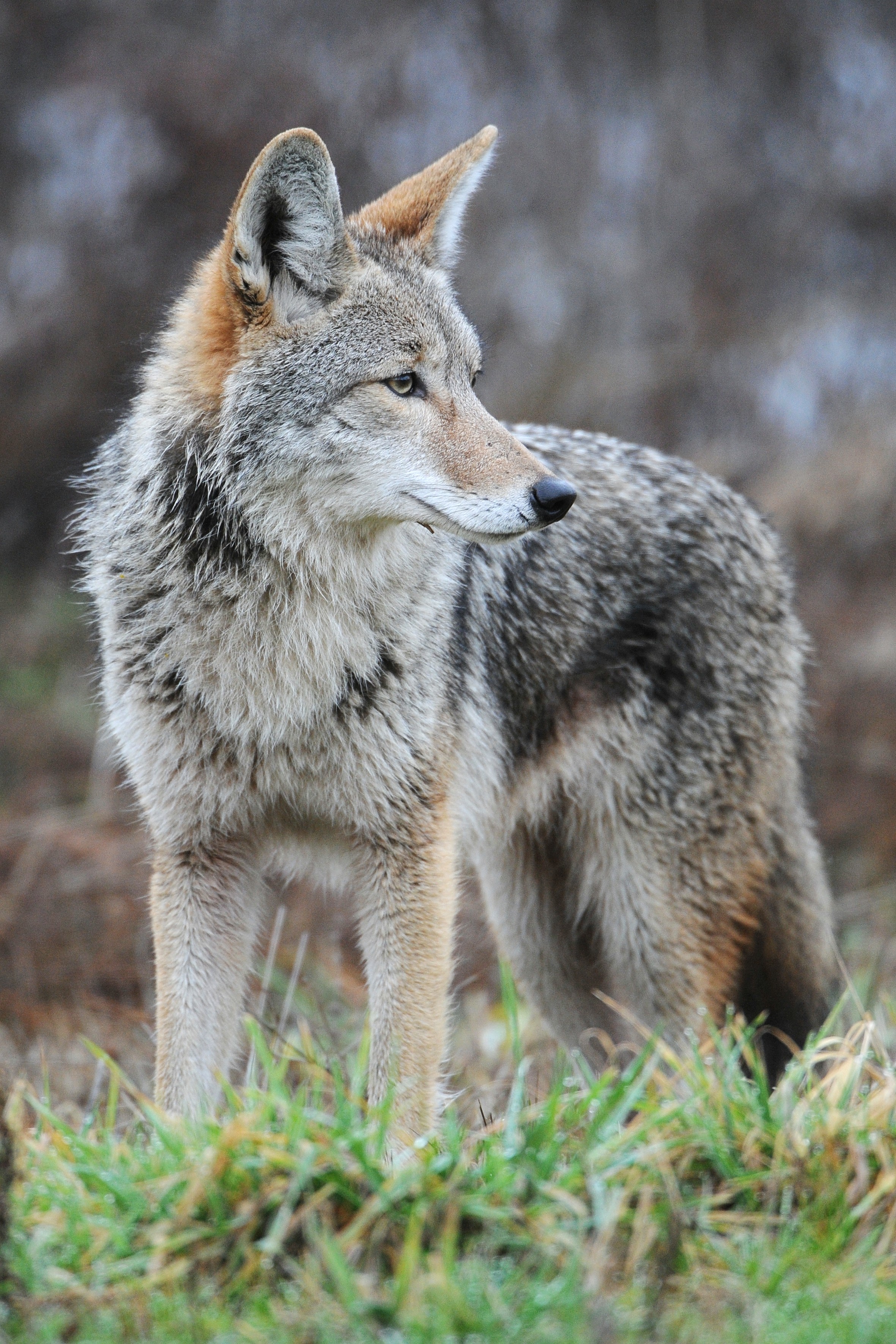
I’m posting this because my chicken coop has officially become a playhouse for the kids. The last of my beautiful, jumbo-egg laying hens are gone, becoming another meal for the local wildlife. I commented on an article in my local paper about urban chicken farming, saying that maybe an urban backyard may be the ideal place for raising chickens, since my woodland home has become a banquet hall for hungry predators. Someone was quick to “educate” me, telling me I needed to provide them a coop so they would roost. Thanks for the tip, but my chicken mansion had Fort Knox-like security at night. It provided not an ounce of safety, however, for my free-rangers during the day from coyotes and hawks. If I try it again, the days of go-where-you-want will not be an option for my girls. And some wonder why commercial chicken producers keep their birds in houses. Hmmm – cruelty or protecting your investment and the food supply?

Cucumber beetles. Thank you, Ric Bessin, entomologist
friend at the University of Kentucky, for the photo.
In addition to my latest chicken chapter, we also attempted a small garden. It is close enough to the house that the deer and rabbits have not been visiting, but the Cucumber beetles absolutely love the squash and cucumbers that I have provided for them. Since I do not have to rely on this garden to feed my family, I have not used any chemical pesticides. I would go out occasionally and knock them away, but didn’t discover their damage early enough. They were clipping off all the blossoms. No blossoms, no fruit. Did I mention that I also have a mysterious, volunteer gourd growing near the garden? The Cucumber beetles really like that one, too.

I obtained the vegetable seeds from Seminis, which is currently marketing a much-talked-about genetically modified hybrid sweet corn called Obsession II. I asked their marketing team recently if any of my seeds were genetically modified, and they said, “no.” I put in a request for beetle resistant squash. If that does not happen soon, and I expect to have any decent harvest, I believe I’ll have to go to chemical warfare. Maybe organic methods work in other places and growing systems, but I have yet to be successful with them. I even had a conversation with an organic farmer in Nebraska explaining that I have had no luck growing cabbage. And to my surprise she said, “That’s why we don’t grow cabbage.”

My chewed up cabbage from last year. Something enjoyed it!
Our final challenge this spring and summer has been the insects that feed on me and my animals: ticks, mosquitoes, horse flies, deer flies and chiggers, as well as the diseases they are known to carry. I've tried just about every product and method available, and the only real relief comes from dousing my kids head to toe with Deep Woods Off every trip outdoors. I can only imagine what that stuff is doing to our bodies as we breathe and soak it in. Nothing works for the horses (but our bond grows stronger every summer because they know I am pleased to provide them a good scratch or squash a juicy horse fly). I am waiting for some smart person to develop a pill or injectable medicine to keep the little bloodsuckers off our skin. 

My challenges are not unique. Our farmers face similar adversity every day, and they are using technology and better management methods to help keep nature from destroying the food supply:
  • Crop rotation and natural predators
  • Crop protection products
  • Structures for plants and animals
  • Conventionally-bred hybrids
  • Irrigation
  • Genetically modified varieties that withstand drought and pests, and allow more efficient pesticide use
  • Vaccines and antibiotics that keep animals healthy
  • Maintaining wildlife refuge areas

And I even know of a vaccine that controls horn flies on cattle (www.flyvax.com) that could significantly reduce their stress. 

Are there any of these methods that you approve of? Any you don't? Are some okay to use when maintaining a lawn or golf course, but not on food? If you do not want antibiotics used for meat animals, does that mean you would forego the same medicine for your child or pet to manage antibiotic resistance? If you don't want any trace of pesticide residues on your produce, does that mean you don't use manufactured pharmaceuticals in your own body. Are their methods you feel do more damage than good?

On one hand I appreciate technology—where would be without it? Hungry, diseased, dead?—but on the my semi-misanthropic hand, I sometimes blame technology for growing the population in the first place, thus providing us the challenge of finding, using and growing the resources to sustain weaker selves. And I understand why some blame technology for creating more challenges or environmental problems, like antibiotic resistance or reductions in beneficial insect populations.

Did I happen to mention one of these
ran 25 ft. behind me and kids on Saturday
night? I've had just about all of "nature"
that I can stand.
Some believe going back to basics (no pesticides, no manufactured fertilizers, no genetic modification, no animal confinement) will put the Earth back into a more natural balance, as "God intended." This philosophy may actually work for some farmers and gardeners. And these food producers have a pretty good base of customers and supporters in our current day. 


But is going back to the beginning really the answer? Do we sit back and pray for the best, or do we use the minds that God gave us to continually outsmart the nature He created in order to flourish?

The biggest issue I have is that some are encouraging our lawmakers and regulators to restrict the use of technology and dictate how food should be produced. Based on my experience, I don’t think there is any way we could produce enough food for our increasing population using 19th century farming methods. I also know that some technologies may need to change — or get better — to protect the Earth and future generations.

What I find as the silver lining here is that I think we can have it all – enough food for everyone, today and in the future, with less strain on our environment. I believe environmental responsibility is a value shared by all farmers, whether they are USDA certified organic, heritage seed savers, or the 3000-acre corn farmer using the latest genetically-modified variety so she does not have to spray as much pesticide or use as much fuel. I see a future of farmers working together for that common goal, and it may be as simple as a crop farmer having a conversation with his bee-keeping neighbor to manage when is the best time to spray any insecticides. But farmers must be able to choose what works best for their climate and the nature-created challenges on our changing planet. At my house, that may be GMO squash and a shotgun.

In the end, I believe that nature will continue to change, and organisms will continue to adapt. The winner will be the one that adapts the quickest. And if a manufactured technology is what it takes to prevail, I will not pass judgment. Nature is a beast, and I want to survive! 

Feel free to follow me on Facebook at http://www.facebook.com/FoodMommy or on Twitter: @foodmommy.

Thursday, April 14, 2011

Why I don’t buy Organic, Most of the Time

Whether it is due to my reluctance to follow the herd or a science-supported notion that old farming methods can’t feed our growing population, I don’t buy organic food. In fact, I tend to avoid it. I do admit, however, that I will buy it if it’s on sale, but it has to be cheaper than the non-organic food items. So what is my body of evidence, you may ask, for my food purchasing decisions?

Food Safety – Several federal agencies are working to make sure our food supply is safe from toxins, chemical residues and disease causing organisms. I took a look at one of the most recent FDA Total Diet Study analyses which are conducted each year on foods we commonly eat. Most every food had trace amounts of a number of chemicals. This data may shock many people. However, the EPA sets standards on what is considered an allowable level of a contaminant. All were well under those levels. And having learned how the EPA sets its standards, they are 10,000 to 100,000 times less than what causes any effect (ill or otherwise). Many studies have shown that organic foods have less pesticide residues than non-organic food, which is to be expected. Some organic food, however, has also been shown to have residues from pesticides that were not approved for use.

We also need to look at fertilizer methods. Plants need nutrients to grow, and they need a lot of them to grow well. Manure is used in many food production systems due to high nutrient content and availability. It is widely used in organic production since synthetic fertilizers are not allowed. If the manure is not managed properly, bacteria in the manure can contaminate the food. I have seen studies and cases where organic is as likely, and even more likely, to contain bacterial pathogens than conventionally-produced foods.

Same goes for livestock. If the animals are not being treated with antibiotics, they are more prone to have an infection. And all livestock are required to be antibiotic-free before they enter the food chain. So when it comes to fruits and vegetables, I believe I have the most control over the safety of the food. I wash it all. My family even teases me for washing things like apples, cucumbers, squash and similar foods with anti-bacterial hand soap, but I know it’s clean! If your rinse it well, you don’t taste soap. You can use a vinegar-water solution on produce that requires gentler handling.

As for meat, cook it to the recommended internal temperature!

Nutrition – Many studies show that fruits and vegetables grown with organic methods have higher levels of antioxidants and polyphenols. But, there is still a debate about the health benefits of these higher levels. It was interesting to learn what causes the increased levels of antioxidants: slower growth and stress from pests. One food toxicologist said that organic foods may be more likely to contain harmful, naturally-occurring toxins due to the same reason.

Regarding meat and dairy produced organically or conventionally, corn-fed or grass-fed, free-range or confined, I have seen study results go in all directions regarding nutrition, but most say there is no real difference. I tend to believe that the best meat, dairy and eggs come from animals fed a nutritionally-balanced diet from a variety of sources and are free from disease and environmental stress. Most all farmers, organic or not, strive to raise animals in this manner.

Environmental Impact – While using less synthetic pesticides and fertilizers are a noble endeavor when producing our food, it may not always be the best for our environment. Depending on the food type, organic production may require more tillage, which impacts soil loss and fuel use. Agriculture is constantly making strides in being able to produce more food with fewer inputs and less environmental impact. We are seeing substantial reduction in soil loss, fertilizer use and pesticide use in modern food production methods.

Economics – Organic is very labor intensive, so in general it costs more. Many families have trouble feeding their families and buying organic is just not an option. I don’t think a family living on a tight budget should feel bad for buying what is more affordable. If it is good enough for the majority of the population - as determined by the USDA and FDA – it is good enough for me.

I recently met Mary Courtney, mom and a grain and produce farmer from Shelbyville, Kentucky. She and her husband Shane grow produce on 30 acres, which according to her, would be unmanageable using organic methods. She also said she wants to be able to mitigate the risk of the environment, insects and weeds since her family’s income is dependent on the quantity and quality of the food they produce. She said some of her products could be considered organic, but she doesn’t use that label in order to be flexible. If products are needed to fertilize or control pests, she said only the absolute minimum is used. Those products are a large expense to her operation. By the way, she feeds her children the food produced on her farm.

I know another farmer who produced organic sweet corn for the grocery stores in his area. I asked why he quit, and he said it just didn’t make sense to grow a more expensive food that he did not feel was any better than the other sweet corn produced on his farm. Even when having an easy option to eat organic, his family was eating the non-organic sweet corn.

Before I close, I need to add that I ate an organic apple today. It was on sale for 88 cents per pound at my grocery store. Since there were a lot of them, my guess is that they were last year’s apples. It was mealy. I hate a mealy apple, organic or not.

I am a true believer in providing my family of four safe, healthy foods. I also believe that the food I provide should be produced in an environmentally sustainable method, which by my definition means using less resources and leaving less impact on the environment. In my mind, our farmers who use modern farming practices are providing me with the food that meets my criteria. I refuse to pay higher prices for food that may or may not be more healthful, humane, or environmentally friendly.

Learn more:

BestFoodFacts.org – Is organic food better for your health than non-organic food?

Food Safety News - http://www.foodsafetynews.com/2010/02/organic-meat-dairy-safer/

Where Your Food Comes From - http://www.wherefoodcomesfrom.com/Blog/

Related Posts Plugin for WordPress, Blogger...