Showing posts with label food production. Show all posts

Thursday, February 21, 2013

This Mom is Thankful for Frankenfood

Yes, I work for farmers who choose to grow genetically modified corn and soybeans. I am able to read research defending the benefits of modified crops to farmers, the environment, and ultimately the growing human population. I also have friends who work for Monsanto, as well as other seed companies, who sell and market genetically modified hybrids. I smiled when I saw that environmental activist Mark Lynas changed his position from condemning genetically modified foods to celebrating them. But in the end, I am NOT defending GMOs or “Frankenfoods” for these reasons. I have a better one.

I have witnessed a huge shift for the better in our food system in the past few years. I see more people interested in food and wanting to know how it is produced. I see more people wanting to purchase food from small, local or organic farmers, and this shift is providing a wonderful opportunity for those willing to provide these foods.  Others want to produce their own food, which is also a step in the right direction to foster future food security.

Having options is good for both the consumer and the producers. Competition is good for business and the economy. I don’t necessarily like that it takes people screaming with fear to have this change happen, but nonetheless, we are moving in a great direction for agriculture. I will continue to share as much information that I can to help others make informed decisions.

And I am sure there are many out there who do not or will not share my glorified opinion of GMOs, and I am fine with that. If someone is looking for non GMO, I will gladly point them in the direction of an organic farmer. I want to see them prosper as well.

Wednesday, July 11, 2012

Wordless Wednesday - Maybe I Won't Spray the Squash


This is what I found this morning in my little garden. In fact, most of the blossoms were sporting 2-4 bees. I was given a reminder of why it may not be best to spray insecticides in every situation. The cucumbers beetles are not in great numbers at the moment, so I'm just squishing the ones I find. 

I'm still not sure how my harvest will turn out, but for now I will enjoy all of  the buzzing.
The bees seem very happy!

Related Posts: Outsmarting Nature

Monday, July 9, 2012

Outsmarting Nature


Many people would like to see food production go “back to nature,” and I think that sounds like a fabulous idea. But where I live, Nature could care less if my family eats. I have tried raising backyard chickens for eggs, and vegetables in a small garden, and I have been met with challenge after challenge. My latest challenges have more than two legs.

Rest in peace, girls. :(
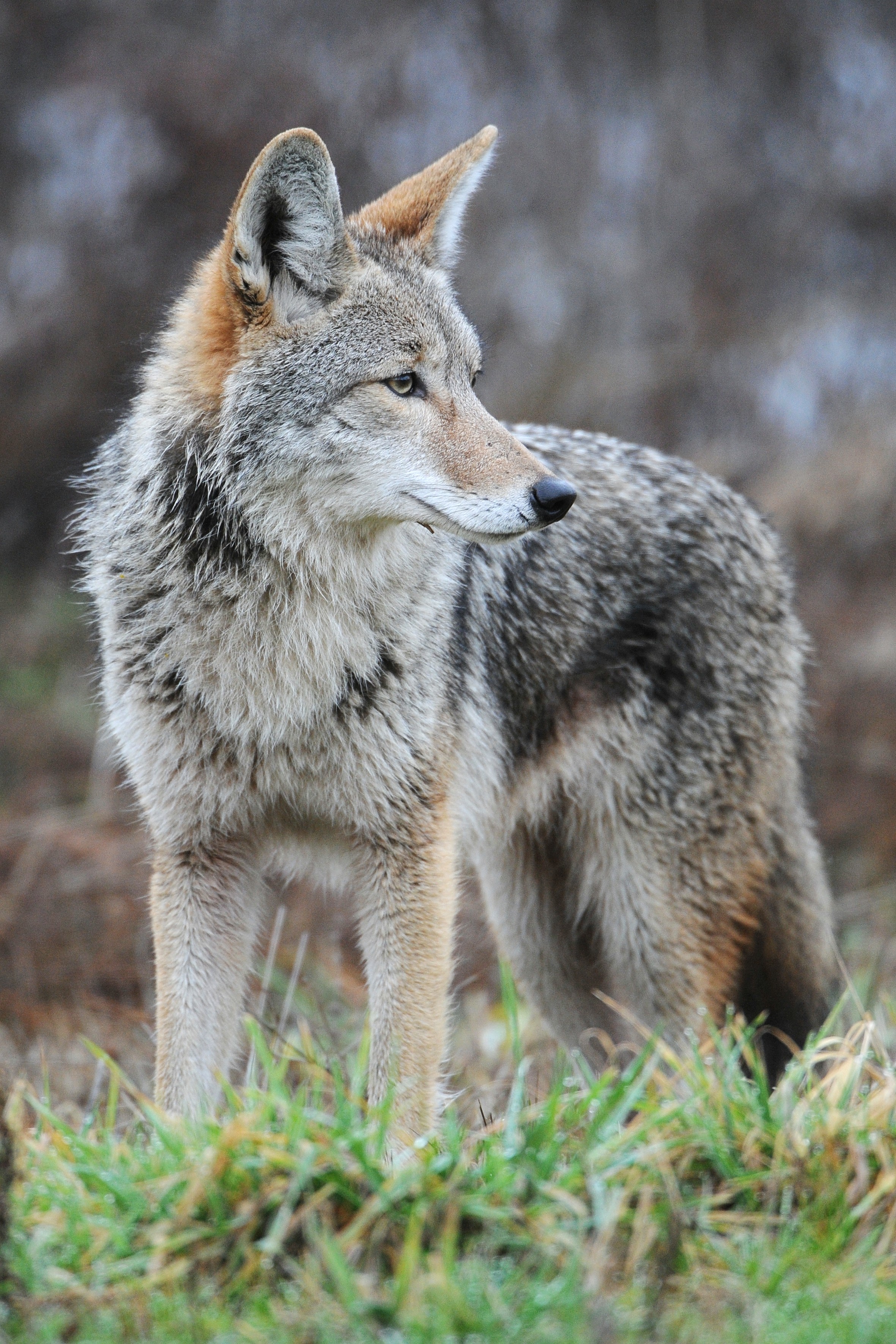
I’m posting this because my chicken coop has officially become a playhouse for the kids. The last of my beautiful, jumbo-egg laying hens are gone, becoming another meal for the local wildlife. I commented on an article in my local paper about urban chicken farming, saying that maybe an urban backyard may be the ideal place for raising chickens, since my woodland home has become a banquet hall for hungry predators. Someone was quick to “educate” me, telling me I needed to provide them a coop so they would roost. Thanks for the tip, but my chicken mansion had Fort Knox-like security at night. It provided not an ounce of safety, however, for my free-rangers during the day from coyotes and hawks. If I try it again, the days of go-where-you-want will not be an option for my girls. And some wonder why commercial chicken producers keep their birds in houses. Hmmm – cruelty or protecting your investment and the food supply?

Cucumber beetles. Thank you, Ric Bessin, entomologist
friend at the University of Kentucky, for the photo.
In addition to my latest chicken chapter, we also attempted a small garden. It is close enough to the house that the deer and rabbits have not been visiting, but the Cucumber beetles absolutely love the squash and cucumbers that I have provided for them. Since I do not have to rely on this garden to feed my family, I have not used any chemical pesticides. I would go out occasionally and knock them away, but didn’t discover their damage early enough. They were clipping off all the blossoms. No blossoms, no fruit. Did I mention that I also have a mysterious, volunteer gourd growing near the garden? The Cucumber beetles really like that one, too.

I obtained the vegetable seeds from Seminis, which is currently marketing a much-talked-about genetically modified hybrid sweet corn called Obsession II. I asked their marketing team recently if any of my seeds were genetically modified, and they said, “no.” I put in a request for beetle resistant squash. If that does not happen soon, and I expect to have any decent harvest, I believe I’ll have to go to chemical warfare. Maybe organic methods work in other places and growing systems, but I have yet to be successful with them. I even had a conversation with an organic farmer in Nebraska explaining that I have had no luck growing cabbage. And to my surprise she said, “That’s why we don’t grow cabbage.”

My chewed up cabbage from last year. Something enjoyed it!
Our final challenge this spring and summer has been the insects that feed on me and my animals: ticks, mosquitoes, horse flies, deer flies and chiggers, as well as the diseases they are known to carry. I've tried just about every product and method available, and the only real relief comes from dousing my kids head to toe with Deep Woods Off every trip outdoors. I can only imagine what that stuff is doing to our bodies as we breathe and soak it in. Nothing works for the horses (but our bond grows stronger every summer because they know I am pleased to provide them a good scratch or squash a juicy horse fly). I am waiting for some smart person to develop a pill or injectable medicine to keep the little bloodsuckers off our skin. 

My challenges are not unique. Our farmers face similar adversity every day, and they are using technology and better management methods to help keep nature from destroying the food supply:
  • Crop rotation and natural predators
  • Crop protection products
  • Structures for plants and animals
  • Conventionally-bred hybrids
  • Irrigation
  • Genetically modified varieties that withstand drought and pests, and allow more efficient pesticide use
  • Vaccines and antibiotics that keep animals healthy
  • Maintaining wildlife refuge areas

And I even know of a vaccine that controls horn flies on cattle (www.flyvax.com) that could significantly reduce their stress. 

Are there any of these methods that you approve of? Any you don't? Are some okay to use when maintaining a lawn or golf course, but not on food? If you do not want antibiotics used for meat animals, does that mean you would forego the same medicine for your child or pet to manage antibiotic resistance? If you don't want any trace of pesticide residues on your produce, does that mean you don't use manufactured pharmaceuticals in your own body. Are their methods you feel do more damage than good?

On one hand I appreciate technology—where would be without it? Hungry, diseased, dead?—but on the my semi-misanthropic hand, I sometimes blame technology for growing the population in the first place, thus providing us the challenge of finding, using and growing the resources to sustain weaker selves. And I understand why some blame technology for creating more challenges or environmental problems, like antibiotic resistance or reductions in beneficial insect populations.

Did I happen to mention one of these
ran 25 ft. behind me and kids on Saturday
night? I've had just about all of "nature"
that I can stand.
Some believe going back to basics (no pesticides, no manufactured fertilizers, no genetic modification, no animal confinement) will put the Earth back into a more natural balance, as "God intended." This philosophy may actually work for some farmers and gardeners. And these food producers have a pretty good base of customers and supporters in our current day. 


But is going back to the beginning really the answer? Do we sit back and pray for the best, or do we use the minds that God gave us to continually outsmart the nature He created in order to flourish?

The biggest issue I have is that some are encouraging our lawmakers and regulators to restrict the use of technology and dictate how food should be produced. Based on my experience, I don’t think there is any way we could produce enough food for our increasing population using 19th century farming methods. I also know that some technologies may need to change — or get better — to protect the Earth and future generations.

What I find as the silver lining here is that I think we can have it all – enough food for everyone, today and in the future, with less strain on our environment. I believe environmental responsibility is a value shared by all farmers, whether they are USDA certified organic, heritage seed savers, or the 3000-acre corn farmer using the latest genetically-modified variety so she does not have to spray as much pesticide or use as much fuel. I see a future of farmers working together for that common goal, and it may be as simple as a crop farmer having a conversation with his bee-keeping neighbor to manage when is the best time to spray any insecticides. But farmers must be able to choose what works best for their climate and the nature-created challenges on our changing planet. At my house, that may be GMO squash and a shotgun.

In the end, I believe that nature will continue to change, and organisms will continue to adapt. The winner will be the one that adapts the quickest. And if a manufactured technology is what it takes to prevail, I will not pass judgment. Nature is a beast, and I want to survive! 

Feel free to follow me on Facebook at http://www.facebook.com/FoodMommy or on Twitter: @foodmommy.

Wednesday, June 27, 2012

Wordless Wednesday: Our Foodie Summer

Our summer has been full of food milestones:


We were asked to take part in a sweet corn taste test. The corn is a genetically-modified hybrid developed by Seminis to protect the crop from insects. It was fabulous! I'm all for reducing pesticide use if possible. 


My first homemade banana nut muffins. It was a great use of too-brown bananas.
I hate throwing away food! While the bananas were obviously not local, I used a packet of Weinsenberger Mills Biscuit Mix instead of Bisquick (which my Betty Crocker cookbook called for). Weisenberger Mills is located in Midway, Kentucky and purchases grain from many of my farmers!


We put out our first official garden. I prepared the spot with my trusty garden claw and some of my horse manure. Then we just stuck in some seeds. We planted tomatoes, cucumbers, scallop squash, carrots, and beans. The beans emerged first, followed closely by the squash and cucumbers. The cucumber beetles have really enjoyed our garden, but they seem to be gone now. Keeping the weeds out is also daily work.


This mysterious plant cropped up about two feet behind the garden in the hard clay. We are still unsure what it is. Someone suggested it may be a gourd. We will see. It's getting bigger by the day.


Our first harvest. Not enough to feed a family of four, but I did cut up the squash and add it to some spaghetti sauce. I am about ready to harvest a few cucumbers.


The wild blackberries are thick at our house. There are about 50 or more bushes on our property. I loaded the kids up with Deep Woods Off and bowls and off we went. I am amazed they have grown so well without human intervention. It has been very dry here this spring and summer, but I guess we had just enough rain.


The first of many blackberry cobblers. It was so delicious. I'm also thinking about trying my hand at blackberry preserves. For breakfast the other morning, I added them on top of a whole wheat tortilla and peanut butter. Roll it up and you've got a great on-the-go meal.


I lost all of my original laying hens to coyotes and hawks.I purchased two new hens and they did not take to the coop. We have yet to catch them, but I recently found where they were laying their eggs... in my hayloft. They are half the size of what I was getting before. I sure do miss my girls. If I try chickens again, I will have to put up a fence. So much for free-range chickens. 

Do you have any good summer food stories? 
Share them here or on Twitter - use #summerfoodfun and tag me - @foodmommy. 

Wednesday, February 15, 2012

Making Food Decisions Built on Trust

I remind myself everyday how lucky I am to work for farmers. The world of agriculture is like a family to me, and I have built some very strong relationships within my state and across the nation. The exciting part is that my family continues to grow.

For the past year, I have been witness and huge nurturer of a sprouting seed called CommonGround. Farm moms and women are becoming empowered to talk about life on their farms and how they are working to raise safe, nutritious, ethical and environmentally-responsible food. And for the first time in my career, I am working with young, vibrant ladies who represent all facets of food production!


From Shana Beattie who raises corn, soybeans, alfalfa hay, beef cattle, 8 million pounds of pork and her four children alongside her husband on a 100+ year old farm in Nebraska to Mary Courtney, who raises vegetables for local customers through a Community Supported Agriculture (CSA) program in Kentucky. She and her husband bought a new farm and are working to support their two young children with one on the way. Linda grows organic produce and crops to enable a livable return on their small farm and Ashley farms several thousand acres of grain in which her family is able to support 14 families by providing jobs in their community. Did I mention they voluntarily participate in an environmental certification program? The best part is that they all support each other.

Katie (right) and her husband raise turkeys for
Subway. How cool is that?
As a mom of two, I embrace the concept of CommonGround: being able to have a conversation with my peers. I have learned so much by listening to these ladies, and I feel better than ever about making a trip to the grocery store. I also know that I want to support local farmers like the Courtney’s, because I have a connection with them, and I know that getting produce closer to the source tastes better. And… wait for it… I no longer look at organic food as some evil marketing scheme trying to dupe me out of my money. It takes a lot of work to comply with certification standards, and a farmer willing to do that should be paid more for his or her labors.

There is room on my table and in my refrigerator for it all, and I can feel good about what I am feeding my family. I have developed trust in my farmers because they are willing to be open with me about why they choose to grow my food in the manner that they do. They are also willing to listen to my concerns and tell me if they can do better. That is meeting on CommonGround, and I am proud to support the movement.

My plea to my readers is that the next time you hear of a food issue in the news or from a fellow friend who may not get their knowledge first hand, seek out one of these fabulous ladies and just ask. You can find them at http://www.findourcommonground.com/. Bookmark it! You can also find many of my farmer friend's blogs by clicking on the tab at the top.

Follow me at www.facebook.com/foodmommy and www.twitter.com/foodmommy.

Friday, September 16, 2011

Hogs on the Highway

I was traveling up the interstate today and saw a semi-trailer load of hogs making its way north. (Okay, I smelled it first and pretty much knew there were hogs on board before I saw their pink little hides.) My reaction when I passed was, “Hello, little piggies. Thank you for feeding me.”

Then I began to wonder about the truck driver. Does he get dirty looks from vegetarians? I wonder how he handles looks of disgust or vulgar gestures. But then I began to wonder about the localvores. Do they also grimace at the sight of food traveling up the highway? Obviously this line of thought intrigued me, and I wanted to think more about why our food, specifically pigs, must travel long distances to get to our dinner plates.

After some research, I calculated the following numbers:

• The average American consumes about 48 pounds of pork each year.

• Market weight of a hog is between 240 and 260 pounds, which yields about 184 pounds of meat.

• Therefore, 1 hog feeds about 4 people per year.

Then I began to think about the town in which I live, population 9,344. In order to feed the people of my town the pork they desire, it would require a local farmer to raise 2,336 hogs per year. That sounds like a lot. So I called one of my favorite Kentucky farmers in the county just south of me and asked about his operation.

The Mackey family feeds 5,000 -6,000 hogs per year. They receive a new batch of weaned pigs every 5 weeks and those pigs are fed for 5 ½ months until they reach 260 pounds. Each batch of pigs received and fed is considered a group, and those groups are sold throughout the year..

The Mackey’s also produce the pigs' feed—corn and soybeans—on 250 acres of adjoining crop ground. All of the manure produced from the hogs is used to fertilizer the feed crops. They have to purchase very little extra nitrogen for the field corn. So all in all, this operation is pretty self-sustaining.

My thought is that it would be fairly easy for a hog farmer to produce enough pork to sustain my town, so long as someone was willing to do it, had the land and resources, and could get a permit for such an operation. The operation would only have to be half as large as the Mackey’s.

But what if we wanted to feed my entire county, population 74,319? That would require 18.5 thousand hogs, so at least 3 to 4 hog operations the size of the Mackey’s would be needed. Since Bullitt County is 300 square miles in size, one hog farm would need to be located every 100 square miles. Most likely, every resident would live within 10 miles of a hog farm. Would they want to do that if they knew they were getting local pork? Of course that is depending upon enough farm acreage available to support the operations, which I am unsure of, and if a local processing facility could be constructed and operated.

But then let’s think about my nearest metropolitan area, just 20 miles north of me (which is likely where the hogs on the highway were heading in the first place). The population is 740,000 people, which would require 185,000 hogs. Land is not available for hog operations, so the pork must come from elsewhere in the state.

The total population of Kentucky is 4,340,000. Today, the commonwealth produces less than 300,000 hogs each year, which is only 1/3 of what we consume. The last year that we produced enough pork to feed the current population was 1980. So to be completely local do we consume two-thirds less pork, or does two-thirds of the population do without? Or, does the price of the pork go so high for increased demand that we can no longer afford to eat it?

I asked the director of my local pork producers association what barriers there were to farmers not producing more hogs. She said profitability was number one. Other factors were that it was harder for new operations to start due to environmental regulations and the fact that the growing suburban population does not want to live near a hog farm.

This scenario is not unique to hog farmers. Whether it is beef, poultry, eggs, or even apples, there are many factors at work that prohibit the required local food production. Demand for food beyond what our land and resources can produce is first and foremost.

Could we do more for ourselves? Those of us who have some land and money are in a better place to be more self-sustaining, but I can’t even get a cabbage to grow or keep my chickens safe from the local carnivores. I could raise that one hog to feed my family of four for a year, but did I mention that hogs are not allowed in my neighborhood? Thank goodness for hogs on the highway!
Related Posts Plugin for WordPress, Blogger...